Background
HIV-1 protease is an aspartic protease essential for the maturation and infectivity of the human immunodeficiency virus. Pepsin, also an aspartic protease, shares structural and mechanistic similarities and is therefore widely used as a surrogate model in preliminary inhibition screening.
Our study, published in the Asian Journal of Chemical Sciences in 2022 (DOI: 10.9734/AJOCS/2022/V12I4226), investigated whether crude extracts of two widely used Nigerian medicinal plants — Vernonia amygdalina (bitter-leaf) and Cymbopogon citratus (lemongrass) — could inhibit pepsin activity.
Study Design
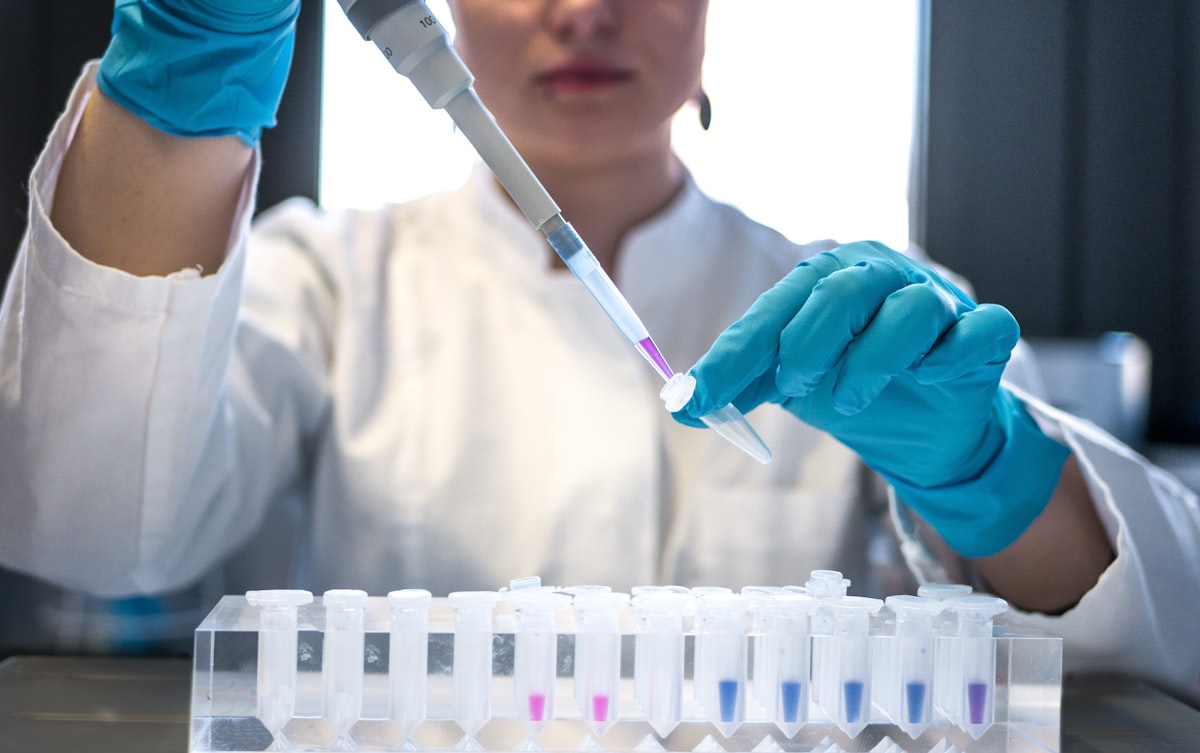
We prepared crude extracts of both plants and tested them against pepsin using a haemoglobin-hydrolysis inhibition assay, with commercially available antiretroviral drugs serving as positive controls. The procedure:
- Pepsin solution (0.5 cm³) + haemoglobin (2 cm³) + plant extract (1 cm³)
- Incubation at 37 °C for 20 minutes
- Reaction stopped with 5% TCA (700 µL)
- Centrifuged at 14,000 rev/min for 5 minutes
- Absorbance measured and percentage inhibition calculated
Key Findings
Both plant extracts demonstrated measurable anti-pepsin activity. The results were dose-dependent and, at the higher concentrations tested, approached inhibition levels observed with the antiretroviral drug controls. This is a preliminary but encouraging finding that supports the traditional use of these plants in managing HIV-associated conditions.
"These results do not mean these plants cure HIV — they indicate that specific compounds within them are worth isolating and testing more rigorously against the actual viral enzyme." — Prof. Saidu Garba
Next Steps
The next phase of this work involves bioassay-guided fractionation to identify the specific compounds responsible for the observed inhibition, followed by molecular docking studies to understand their interaction with HIV-1 protease at the structural level. This is an active area of our research programme.
Vernonia amygdalina and Cymbopogon citratus are abundant, inexpensive, and safe at normal doses — making them highly promising starting points for drug lead discovery.